


Jakarta — The Directorate General of Intellectual Property (DGIP) of the Ministry of Law emphasized that education on copyright and compliance with the mechanisms for using music for commercial purposes are fundamental steps in building a healthy and equitable national music ecosystem. Many business operators still do not realize that playing music in public spaces or organizing concerts constitutes a form of commercial use that must comply with applicable legal provisions.
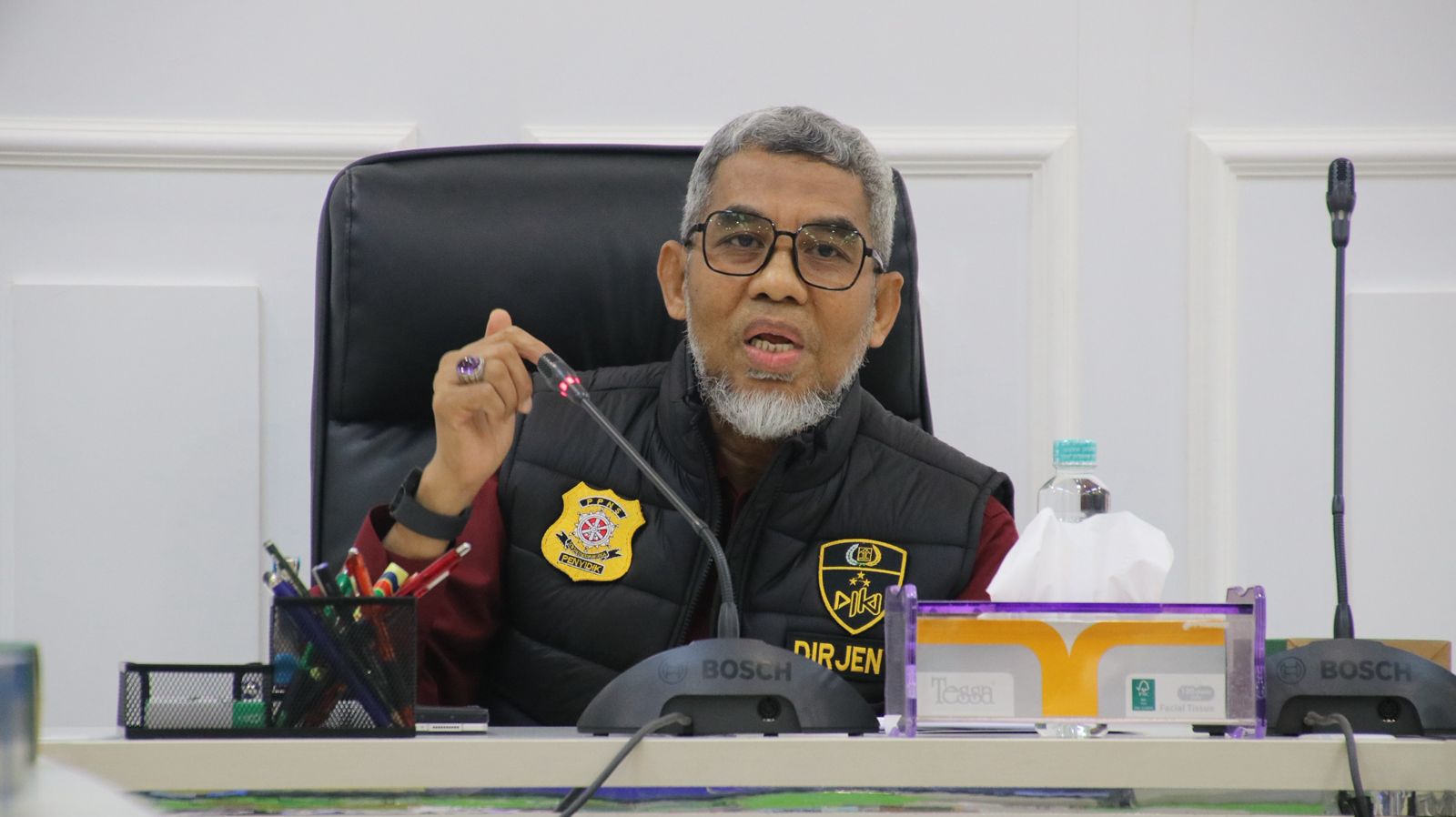
“This is not just about paying royalties, but about understanding that every creative work has economic rights that must be respected. Business operators need to understand that using music in commercial spaces without permission or without paying royalties is a violation,” emphasized the Director General of Intellectual Property, Razilu, on June 17, 2025, at the DGIP Office in South Jakarta.
In accordance with Law Number 28 of 2014 on Copyright, any use of music for commercial purposes requires permission from the creator or copyright holder. However, to facilitate licensing, the law has mandates the establishment of the National Collective Management Organization (CMO National) as a one-stop intermediary. Based on Article 23 paragraph (5) and Article 87 of the Copyright Law, business operators or users of public services for commercial purposes are only required to pay royalties once through a centralized system, which will then be distributed to creators and related rights holders (singers, musicians, phonogram producers) through Collective Management Organizations (CMOs).
“The obligation to pay royalties has been strictly regulated in Government Regulation Number 56 of 2021 on Royalty Management. Article 9 paragraph (1) explains that anyone who uses songs or music in public commercial services is required to apply for a license through the CMO National. This applies to various forms of music utilization, from those played in restaurants, cafes, pubs, and discotheques, to music concerts,” explained Razilu.
The royalty rates has also been clearly stipulated in the Decree of the Minister of Law and Human Rights Number HKI.2.OT.03.01-02 of 2016, which is 2% of gross ticket sales and an additional 1% for free tickets, or 2% of production costs for non-ticketed concerts. The responsibility for payment lies with the event organizers or business owners, not with the singers or musicians—unless they also act as the organizers.
Once payment is made through CMO National, users are no longer required to obtain direct permission from the creator or copyright holder for performing rights, as the legal obligation has been fulfilled. This provides clarity, convenience, and legal certainty for business operators.
“If a dispute arises during the royalty payment process, resolution can be achieved through mediation as regulated in Article 95 paragraph (4) of the Copyright Law. This procedure is provided to ensure that all parties can resolve differences fairly and without prolonged conflict,” he added.
DGIP is committed to continuously providing education, guidance, and supervision regarding the use of music for commercial purposes. Compliance with copyright law is not only a legal protection for creators but also an ethical foundation that strengthens the national creative industry.
“We want the public and business ownerss not only to comply with the rules but also to truly understand why the rules were made. Copyright protection is a form of support for the progress of Indonesian music,” Razilu concluded.
Source of the article : Education and Compliance Are Key to an Equitable Music Ecosystem